Library

Ten performances recorded in Tanzania, mid to late 20th century

Introductory Essays
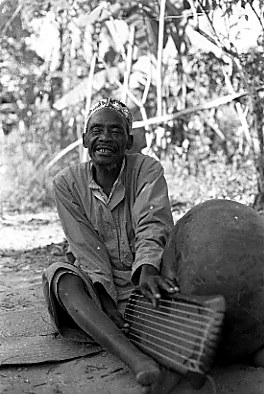
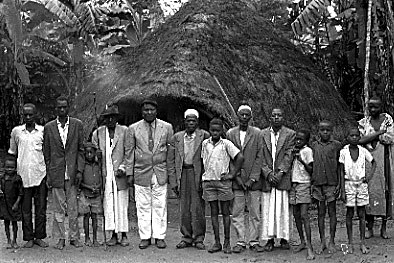
The Haya People
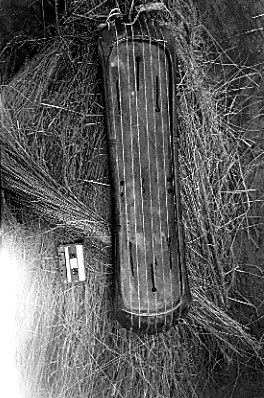
The Enanga Epic Ballad Tradition
The Heroic Age in Epic Ballads
The “Call” Episode in Ballads: Narrative Logic and Principal Themes
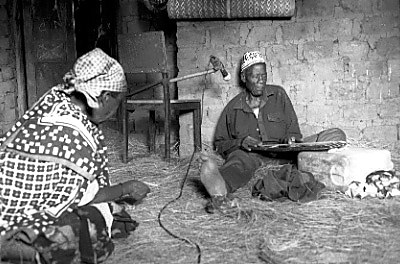
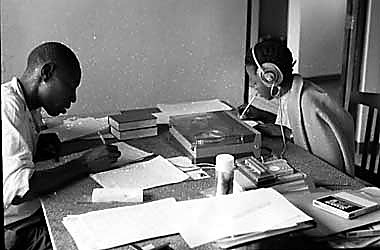
Recording These Performances
Four Bards, Four Distinct Voices
Poetic Forms in Haya Epic Ballads

The Ballads

Mugasha I
Habib Suliman (recorded 1950 by Hugh Tracey, published by the International Library of African Music)
Read the introduction Listen
Mugasha I is about a courtship and marriage between two supernatural beings imbued with markedly different social standings: Mugasha, the lowly fisher-god, controller of the spirits of Lake Victoria, and Lyanyaibungo, daughter of the god-king Wamara. It is an anti-romantic marriage, based not in shared affection but in matchmaking as a discourse and an exchange between social groups. Mugasha’s proposal and Lyanyaibungo’s refusal stirs up a war of the gods.
Kajango
Muzee of Kanazi
Read the introduction Listen
The love in Kajango is that of a marriage after eight or ten years, when the issue of property has emerged, like a child, to become part of the relationship. The bard elaborates this theme in ways alternately humorous, heroic, mysterious, and grotesque, but always humanely focused on the domestic pair. Cultural ideas of property, obligation, and debt underlie this natural and supernatural narrative.
King Kitekere
Abdallah “Feza” Kaluandila
Read the introduction Listen
Abdallah Feza’s Kitekere is a richly detailed tableau of the royal court of one of the most famous kings of Hayaland, a man who established his own dynasty. Within its frame appear courtly activities, roles, institutions, ideologies and, of course, language arts. Kitekere’s portrait is embellished with the trappings of power, in his appearance, his gestures, his speech, and in the ways others speak to and about him.
Kachwenyanja
Muzee of Kanazi
Read the introduction Listen
Kachwenyanja is about love, death, and the power and transcendence of poetry. Exploding outward from a loving pair — a royal warrior and his new bride — the constellation of themes takes shape within a particular Haya cultural world of romantic attachment, military action, and poetic expression.
Rukiza
Justinian Mugasha
Read the introduction Listen
Justinian Mugasha’s performance of Rukiza is a series of poetic vignettes that depicts how one-time cattle-holding haves became have-nots. A familiar thematic opposition underlies that sequence and emerges with stark contrast in an armed conflict between a king and a clan patriarch. This ultimately tragic struggle develops equally along military, supernatural, and domestic dimensions.
King Kaitaba
Abdallah “Feza” Kaluandila
Read the introduction Listen
King Kaitaba ruled the central Haya Kingdom of Kyamtwara in the middle of the 19th century. Son of Kitekere, the founder of the Bankango dynasty, Kaitaba appears heroically amidst the symbols and prerogatives of royal rule, and he responds to a grave provocation by thoroughly defeating the armies of a neighboring king — even though that provocation is fabricated by his own men.
Mugasha II
Habib Suliman (recorded 1980 by Mukama Gabriel Rugabandana)
Read the introduction Listen
This second version of Mugasha by Habib Suliman is no less a remarkable performance than that recorded by the bard 30 years earlier. Habib’s 1980 version represents the evolution of the bard’s art toward a more mimetic and theatrical style.
The Tree Mwata
Muzee of Kanazi
Read the introduction Listen
The Tree Mwata presents the further colorful exploits of the lake god Mugasha. In this story, his friendly alliance with the famous 17th-century ruler of Kyamutwala kingdom, Rugomora Mahe, presents an opportunity for adventure that has him literally stomping all over Hayaland. At the outset, the king is deeply troubled and sends emissaries to Mugasha, who solves the king’s problem with his characteristic humorous, rollicking, and world-altering style.
Kaiyula
Muzee of Kanazi
Read the introduction Listen
Kaiyula is a poetic evocation of human passion: both the supernatural heat that melts together lovers created only for each other, and a lover’s crazy, aesthetic, mind-altering embrace of the other’s beauty. A problem for them both, as the bard unfolds it, is that neither form of love fits very well into the institutions of Haya heroic society and the social contracts that maintain them.
The Place You Come From
Justinian Mugasha
Read the introduction Listen
The Place You Come From is rich in poetic imagery. Indeed, the proper use and interpretation of metaphor is the pivot on which the action turns. As in the ballads King Kaitaba and Mugasha, the dramatic energy that drives the plot forward begins with a controlled verbal insult. Narrative action includes sex, accusation, judicial judgment, and explications of poetic imagery.